Updated on 12 July 2026
Tax Refund 2026: How to Check Status, Avoid Delays and Stay Safe
If your income tax return for AY 2026-27 shows a refund, the next step is not only waiting for the money. You should make sure your return is verified, your bank account is valid, your tax credits are correctly reflected and your contact details on the income tax portal are updated.
Refund processing depends on return processing by the Income Tax Department. A correct return, clean bank details and proper e-verification can reduce avoidable delays.
1. E-verify your ITR first
A refund is processed only after the return is treated as valid for processing. If your ITR has been filed but not verified, complete e-verification through the available method such as Aadhaar OTP, net banking, EVC or DSC, depending on your case.
2. Check refund status on the official portal
Use the official Income Tax e-Filing portal to check return and refund-related updates. Avoid relying on random links received through SMS, email or social media. Always type the official portal address yourself or use a saved trusted bookmark.
3. Make sure your bank account is valid
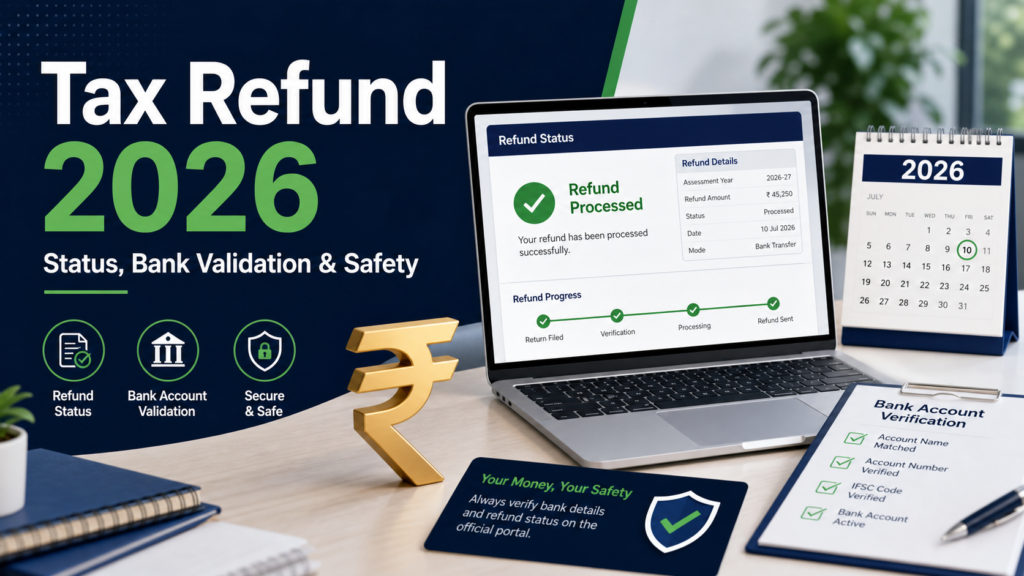
Refunds are credited to the bank account selected in the ITR. If the account number, IFSC, account status or PAN linkage is incorrect, the refund may fail. Review bank account details and keep the account active until the refund is received.
4. Reconcile TDS, TCS and tax payments
Before expecting a refund, compare the tax credit claimed in your ITR with Form 26AS, AIS and TIS. If TDS is missing, lower than expected or reported under a wrong PAN, follow up with the deductor instead of claiming unsupported credit.
5. Watch for refund failure reasons
- ITR filed but not e-verified.
- Bank account not valid or closed.
- Incorrect account number or IFSC.
- PAN and bank account details do not match.
- Tax credit mismatch in Form 26AS, AIS or TIS.
- Return selected for additional review or adjustment.
6. Be careful of refund scams
Do not click suspicious refund links or share OTP, net banking password, card details or remote access. The Income Tax Department does not need your debit card PIN or UPI PIN to issue a refund. If you receive a message asking for urgent bank verification through an unknown link, treat it as unsafe.
Quick refund checklist
- Confirm ITR is filed and e-verified.
- Check ITR processing status on the official portal.
- Review bank account number, IFSC and account status.
- Compare refund claim with Form 26AS, AIS and TIS.
- Keep emails and SMS from the official portal for reference.
- Use only official portal links for refund status and services.
FAQs
1. How long does an income tax refund take?
The time can vary depending on e-verification, return processing, tax credit matching and bank validation. A return with mismatches or incorrect bank details can take longer.
2. Can refund be issued before e-verification?
No. The return must be verified and processed before refund credit can happen.
3. What should I do if refund fails?
Check bank details, account status and portal messages. If required, update or validate the bank account and follow the refund-related service process available on the official portal.
4. Why is my refund lower than expected?
The department may adjust refund after processing, tax credit verification or outstanding demand checks. Review the intimation and compare it with the return computation.
5. Can Quick Efiling Solutions help with refund delay?
Yes. Quick Efiling Solutions can review your ITR, Form 26AS, AIS/TIS, bank details and portal status to identify the likely reason for delay or mismatch.
Need help with your tax refund?
Quick Efiling Solutions can help you check your return status, reconcile tax credits and review refund-related issues.
Request a consultation or call +91 9811818306.
Official references:
This article is for general awareness only. Refund processing depends on return details, tax records, portal processing and applicable law.