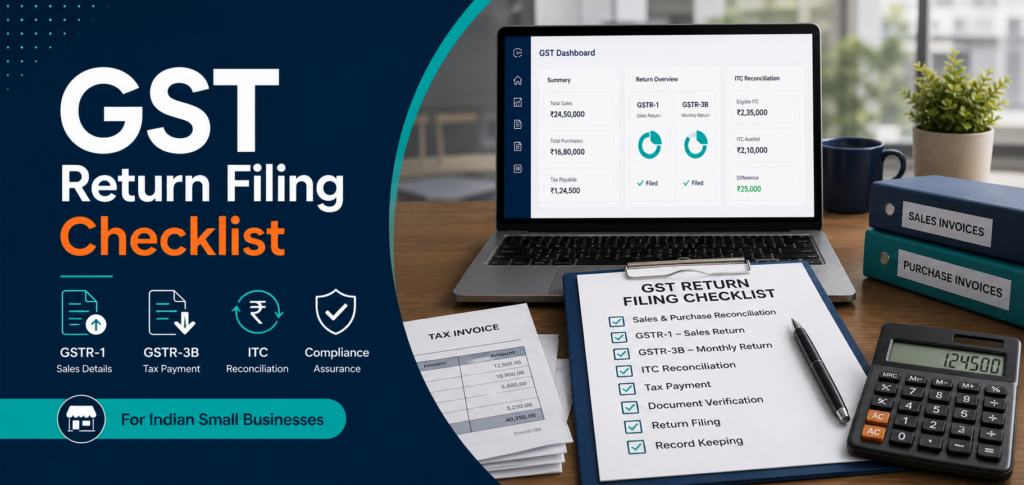
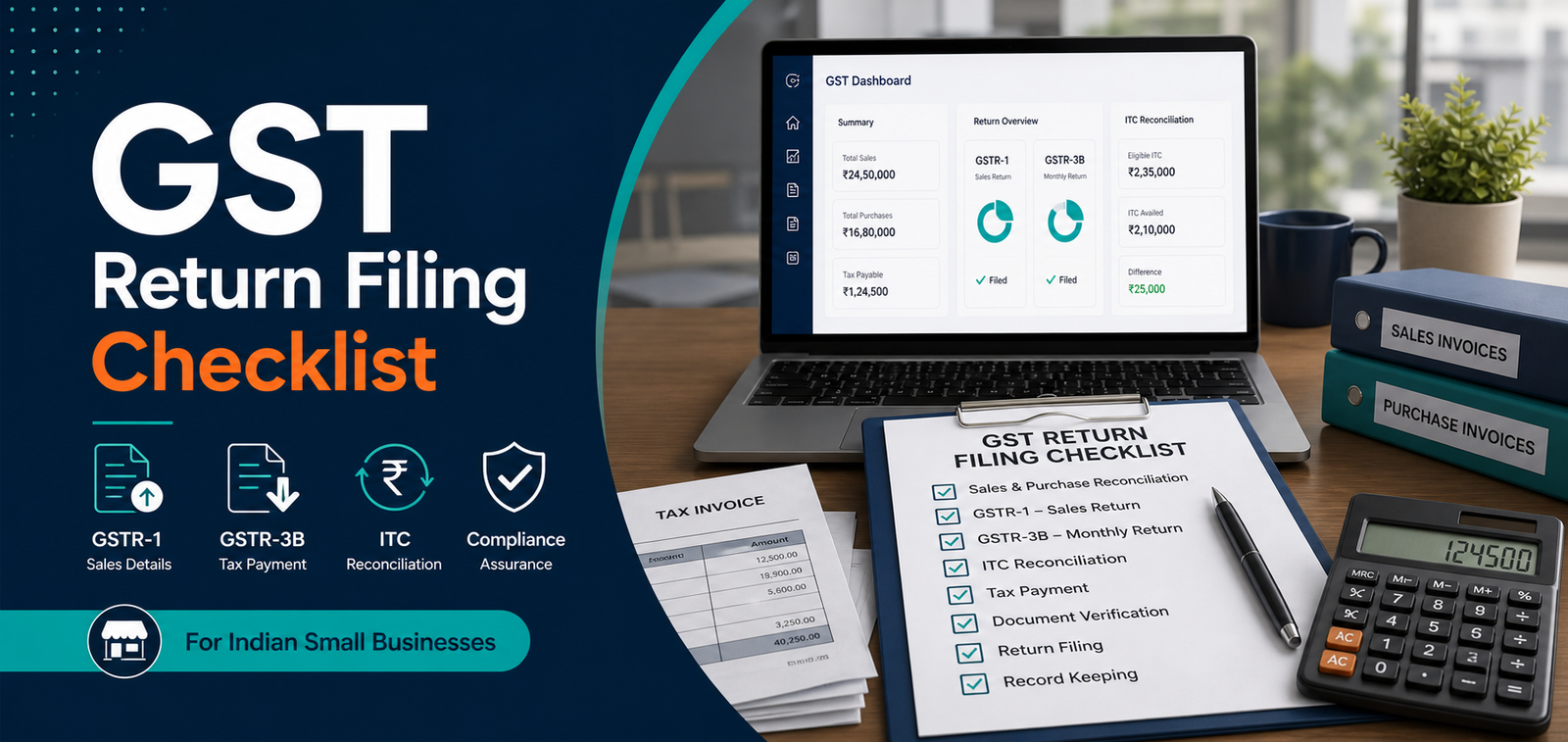
GST return filing is easier when invoices, tax payments and Input Tax Credit are checked before the return is submitted. This checklist is designed for small businesses, traders, service providers and freelancers who want fewer filing errors and better compliance discipline.
As per the GST Portal help content, Form GSTR-3B is a summary return where taxpayers declare GST liability for a tax period and discharge that liability. The portal also explains that normal taxpayers are required to file GSTR-3B for every tax period, including nil returns where applicable.
1. Check Sales Before Filing GSTR-1
Start with outward supplies. Match your sales invoices with e-invoices, debit notes, credit notes and any amendments from previous months. For B2B supplies, GSTIN, invoice number, date, place of supply and taxable value should be checked carefully because mistakes can affect your customer's ITC.
- Keep invoice numbering consistent.
- Separate taxable, exempt, nil-rated and export supplies.
- Review credit notes and debit notes before filing.
- Confirm whether any previous-period invoice needs amendment.
2. Reconcile Purchase Invoices With GSTR-2B
Before claiming ITC in GSTR-3B, compare your purchase register with GSTR-2B. Missing supplier invoices, cancelled invoices, wrong GSTIN entries or blocked credits can create mismatch risk. A monthly reconciliation habit is much easier than correcting several months at once.
- Check supplier GSTIN, invoice date and taxable value.
- Identify invoices not reflected in GSTR-2B.
- Follow up with vendors before the filing due date.
- Do not claim ineligible ITC just because it appears in records.
3. Review GSTR-3B Auto-Populated Values
The GST Portal states that GSTR-3B values can be auto-populated from GSTR-1/1A and GSTR-2B, and that the system-generated summary helps reduce mismatch and improve compliance. Review the draft values instead of filing blindly.
- Compare outward taxable supplies with GSTR-1.
- Compare ITC with GSTR-2B and your books.
- Check reverse charge liability separately.
- Verify interest, late fee and cash ledger balance.
4. Check Tax Payment and Cash Ledger
After ITC adjustment, review the cash payable amount. Make sure challan payment, electronic cash ledger and liability offset are completed before final filing. Once GSTR-3B is filed, it cannot be revised; corrections are generally adjusted in later periods.
5. Nil Return: File Only After Checking Conditions
A nil GSTR-3B may be filed only when there are no outward supplies, no inward supplies requiring reporting, no ITC claim or reversal, no reverse charge liability and no other tax, interest or late fee liability. If there was business activity, a nil return may not be correct.
Documents to Keep Ready
- Sales register and tax invoices.
- Purchase register and supplier invoices.
- Debit notes, credit notes and amendment details.
- GSTR-2B reconciliation working.
- Bank/payment proof for GST challan.
- Expense invoices for ITC review.
Need Help With GST Return Filing?
Quick Efiling Solutions can help you review invoices, reconcile ITC, prepare GSTR-1 and GSTR-3B, and file your GST returns correctly.
FAQs
Is GSTR-3B mandatory if there is no business in a month?
Yes, the GST Portal help page states that GSTR-3B filing is mandatory for normal and casual taxpayers even if there is no business in that tax period. In such cases, nil filing may apply if all conditions are satisfied.
Can GSTR-3B be revised after filing?
No. The GST Portal guidance says GSTR-3B once filed cannot be revised. Any adjustment, if allowed, is generally made in a subsequent return period.
Why should I reconcile ITC before filing?
Reconciliation helps confirm that eligible purchase invoices are reflected properly and reduces the chance of mismatch between your books, GSTR-2B and GSTR-3B.
What should I check before filing GSTR-1?
Check invoice numbers, GSTIN details, taxable value, tax rate, place of supply, credit notes, debit notes and amendments before submission.
Official References
Source: GST Portal help on Form GSTR-3B.